Sunday, December 31, 2023

What is a Wireless Body Area Network?


Body Area Network is being used to torture people. Implants are Radio Frequency Devices (RFID), GPS Chips and Ultrasound ID Chips, accelerometers, motion sensors, pressure sensors and neuromuscular stimulators which are stimulated by High Frequency Ultrasound which has 7 times the power limits of electromagnetic frequencies and travel 100 times faster through body tissues. This medical surveillance system can be triggered with an app on a mobile phone.  Once connected, anyone who has the MAC address of your implants can turn them on and connect you with the implanted sensors.

See here for the Wikipedia article. Also see this article "Slavery by Satellite" a must read article from academics. 

A wireless body area network (WBAN)  is a wireless network of wearable computing devices which may be implanted inside the body, worn or carried.  Implanted devices are networks consisting of several miniaturized body sensor units (BSUs) together with a single body central unit (BCU). Smart devices or cell phones act as a data hub, data gateway, providing a user interface to view and manage BAN applications.  A WBAN system can use WPAN wireless technologies as gateways to reach longer ranges. Through gateway devices, it is possible to connect the devices in the human body to the internet. This way, medical professionals can access patient data online using the internet independent of the patient location.. 

The system is touted as being healthcare, but in reality it is being used as an illegal surveillance which takes away the individuality, the privacy, the dignity and independence of a human being. Every activity is recorded. Someone watches every activity, including bathroom activities and having sex.  Every heartbeat and breath can be monitored and recorded. Note that they can communicate using satellites and drones.

TORTURE AND DEATH CAN BE ACCOMPLISHED WITH THIS SYSTEM AND THE MURDERERS WILL NEVER BE BROUGHT TO JUSTICE.

​What is Biotelemetry?

Biotelemetry (or medical telemetry) involves the application of telemetry in biologymedicine, and other health care to remotely monitor various vital signs of ambulatory patients. Virtually any physiological signal could be transmitted.


A typical biotelemetry system is comprised of (1) sensors appropriate for the particular signals to be monitored, (2) a battery but some do not require batteries because they are stimulated with frequency or light (3) a radio antenna and receiver, and (4) a display unit or monitor to display information from patients.


Click On Pic To Enlarge


A Very Low Power MAC (VLPM) Protocol for Wireless Body Area Networks

by Niamat Ullah *, Pervez Khan and Kyung Sup Kwak

Published: 25 March 2011

Abstract: Wireless Body Area Networks (WBANs) consist of a limited number of battery operated nodes that are used to monitor the vital signs of a patient over long periods of time without restricting the patient’s movements. They are an easy and fast way to diagnose the patient’s status and to consult the doctor. Device as well as network lifetime are among the most important factors in a WBAN. Prolonging the lifetime of the WBAN strongly depends on controlling the energy consumption of sensor nodes. To achieve energy efficiency, low duty cycle MAC protocols are used, but for medical applications, especially in the case of pacemakers where data have time-limited relevance, these protocols increase latency which is highly undesirable and leads to system instability. In this paper, we propose a low power MAC protocol (VLPM) based on existing wakeup radio approaches which reduce energy consumption as well as improving the response time of a node. We categorize the traffic into uplink and downlink traffic. The nodes are equipped with both a low power wake-up transmitter and receiver. The low power wake-up receiver monitors the activity on channel all the time with a very low power and keeps the MCU (Micro Controller Unit) along with main radio in sleep mode. When a node [BN or BNC (BAN Coordinator)] wants to communicate with another node, it uses the low-power radio to send a wakeup packet, which will prompt the receiver to power up its primary radio to listen for the message that follows shortly. The wake-up packet contains the desired node’s ID along with some other information to let the targeted node to wake-up and take part in communication and let all other nodes to go to sleep mode quickly. The VLPM protocol is proposed for applications having low traffic conditions. For high traffic rates, optimization is needed. Analytical results show that the proposed protocol outperforms both synchronized and unsynchronized MAC protocols like T-MAC, SCP-MAC, B-MAC and X-MAC in terms of energy consumption and response time.


Survey of WBSNs for Pre-Hospital Assistance: Trends to Maximize the Network Lifetime and Video Transmission Techniques

by Enrique Gonzalez, Published: 22 May 2015

Abstract: This survey aims to encourage the multidisciplinary communities to join forces for innovation in the mobile health monitoring area. Specifically, multidisciplinary innovations in medical emergency scenarios can have a significant impact on the effectiveness and quality of the procedures and practices in the delivery of medical care. Wireless body sensor networks (WBSNs) are a promising technology capable of improving the existing practices in condition assessment and care delivery for a patient in a medical emergency. This technology can also facilitate the early interventions of a specialist physician during the pre-hospital period. WBSNs make possible these early interventions by establishing remote communication links with video/audio support and by providing medical information such as vital signs, electrocardiograms, etc. in real time. This survey focuses on relevant issues needed to understand how to setup a WBSN for medical emergencies. These issues are: monitoring vital signs and video transmission, energy efficient protocols, scheduling, optimization and energy consumption on a WBSN.


Click On Pic To Enlarge


The challenge of designing in-body communications

https://www.embedded.com/the-challenge-of-designing-in-body-communications/

October 26, 2004 Embedded Staff

The range of medical devices and systems being implanted into the human body is increasing rapidly. Evolving from the first implanted pacemaker in the late 1950s, today's in-body devices are now being used to regulate bodily functions, stimulate nerves, and treat diseases such as Parkinson's, Alzheimer's, and epilepsy.

Figure 1: Almost every aspect of a patient's health can now be monitored or regulated by an implanted device.

As Figure 1 shows, almost every aspect of a patient's health can now be monitored or regulated by an implanted device. These range of devices pose unique power, signal processing, and communication challenges for designers.

The 402- to 405-MHz band is well suited for in-body communications networks, due to signal propagation characteristics in the human body, compatibility with the incumbent users of the band (meteorological aids, such as weather balloons), and its international availability. The MICS standard allows 10 channels of 300kHz each and limits the output power to 25μW.

Medical devices can be categorized into those that use an internal non-rechargeable battery (such as pacemakers) and those that couple power inductively (such as cochlear implants). The former employs a duty-cycling operating system to conserve power. The transceiver is “off” most of the time, meaning the off-state current and the current required to periodically look for a communicating device must be extremely low (less than 1μA).


Sensors (Basel). 2011; 11(6): 5561–5595.

Published online 2011 May 26. doi: 10.3390/s110605561

PMCID: PMC3231450

PMID: 22163914

Wearable and Implantable Wireless Sensor

Network Solutions for Healthcare Monitoring

Ashraf Darwish1,* and Aboul Ella Hassanien2

Author information Article notes Copyright and License information Disclaimer

This article has been corrected. See Sensors (Basel). 2012; 12(9): 12375.


Abstract: Wireless sensor network (WSN) technologies are considered one of the key research areas in computer science and the healthcare application industries for improving the quality of life. The purpose of this paper is to provide a snapshot of current developments and future direction of research on wearable and implantable body area network systems for continuous monitoring of patients. This paper explains the important role of body sensor networks in medicine to minimize the need for caregivers and help the chronically ill and elderly people live an independent life, besides providing people with quality care. The paper provides several examples of state of the art technology together with the design considerations like unobtrusiveness, scalability, energy efficiency, security and also provides a comprehensive analysis of the various benefits and drawbacks of these systems.


Click On Pic To Enlarge


IMPLANTS FOR MEDICAL USE AND FOR TORTURE


Above and below, you will see diagrams of a person who has been implanted with medical devices in what is called a Wireless Body Area Network (BAN). Implants are sensors that are connected with computers by means of a cell phone which communicates to medical, law enforcement and Homeland Security. Also sensors in humans can be connected to implants in other humans and to the sensors in homes, furniture, vehicles, buildings, electrical wiring, roads, etc.


The implants in a BAN are very similar to a diagram of a person called a Targeted Individual who has been implanted with medical devices for the purposes of tracking, stalking, harassing, surveilling, torturing and killing them. They are tortured in their home, vehicle and public places outside and inside. This indicates that the infrastructure in the Smart Grid is being used against them instead of for medical purposes. Organized stalking is carried on by contractors, including police, firemen, medical EVAC personnel, veterans and others. See COPS program. Smart phones are being used to stimulate the implants in TI's.


Click On Pic To Enlarge


Monday, December 18, 2023

Targeted Individual Program is US Special Operations Command’s “Continuous Clandestine Tagging, Tracking, and Locating Hostile Forces

 Click on Links Below to Read the

 Government Documents


The following seven power point presentations made by and for US Special Operations Command (USSOCOM) and their military and corporate partners clearly describe and detail the “technology,” systems, and personnel behind the “organized stalking-electronic torture program." 

These power point presentations indicate that this new form of unconventional warfare/low intensity conflict being covertly waged against civilians placed on the Terrorism Watch List under the pretext of the so-called “War on Terrorism” is actually “multi-domain warfare.”

The following terms and technologies, depicted in these power point presentations, strongly suggest that so-called “Clandestine Tagging, Tracking, and Locating (CTTL)”, later termed “Hostile Forces- Tagging, Tracking, and Locating (HF-TTL), is the USAP (Unacknowledged Special Access Project) commonly referred to as the Targeted Individual Program/Organized Stalking-Electronic Harassment. 

Furthermore, TIs are obviously the expendable guinea pigs/test subjects for development of these technologies:

1) Tagging, Tracking, and Locating Human (High-value) targets aka “hostile forces” to support the Global War On Terrorism (GWOT)
2) Technologies include:
Nanotechnology (including Quantum Dot and Self-assembled Photonic Antenna)
Biotechnology (including “biomimetic devices for detection and identification at long distances” and “Taggants for Biological Signature Amplification, Translation,”)
Chemistry (including “signature enhancing Taggants” and “chemical/biochemical sensors for natural signatures”)
3) Participating agencies include: DARPA, Army Research Lab, NSA, DIA, CIA, Homeland Security, FBI,  Air Force Research Lab, DOE, and Industry
4) Human signature detection via skin spectral emissivity's, thermal fingerprints at long distance
5) fieldable “bio-electronics”
6) bio-engineered signature translation and bio-reactive taggant (implant)
7) self-assembled photonic antennae
8) biometrics and tactical site exploitation (forensics)
9) Operation “Silent Dagger” 
10) Ground SIGINT (Signals Intelligence) Kit (GSK)
11) Joint Threat Warning Systems from the Air, Land, and Sea
12) RF (radio-frequency) and non-traditional (eg., optical/multi-band) Tags and R/Xs
13) “synchronize acquisition of signals intelligence (SIGINT) capabilities across the air, ground and maritime (warfare) domains”
14) SPECIAL RECONNAISSANCE, SURVEILLANCE, AND EXPLOITATION
15) Blue Force Tracking (BFT)
16) Special Operations Tactical Video Systems (SOTVS)
17) Sensitive Site Exploitation (SSE)
18) tiny satellites that keep tabs on targets from above (SpaceX rocket carrying the CubeSats—inexpensive satellites so small they can fit in the palm of your hand)
19) tracking satellites are part of the growing Special Operations focus on “high-value target” missions
20) tracking tags on enemies including radio frequency identification devices, quantum dots that could be used to track a singe molecule, and tagging measures such as insect pheromones
To acquire the high-value human “targets” needed to test and develop these clandestine weapons systems, the US government, through the FBI-DHS Fusion Centers and Neighborhood Watch Programs among others, has mislabeled innocent citizens as “terrorists” and “hostile forces.” Thus, ALL involved in these operations are complicit in “crimes against humanity,” “war crimes,” murder, attempted murder, torture, terrorism, and TREASON. These individuals and institutions are the real terrorists and they are TRAITORS!

These programs are funded via American tax dollars and deploy regular and irregular (citizen-based agents) forces as well as special forces against innocent citizens.

I. US Special Operations Command: Continuous Clandestine Tagging, Tracking, and Locating (CTTL)


by Doug Richardson SOAL-T WSO, Sept. 5, 2007

Also at: Continuous Clandestine Tagging, Tracking, and Locating (CTTL) Mr. Doug Richardson SOAL-T WSO5 September 2007 US Special Operations Command

Mr. Doug Richardson SOAL-T WSO 5 September 2007. The overall classification of this briefing is: UNCLASSIFIED and Locating (CTTL) The Ability to Locate, Track, and Identify Human Beings.

Highlights From PPT:

p. 3: Continuous Clandestine Tagging, Tracking, and Locating (CTTL)

– The Ability to Locate, Track, and Identify Human Beings and Other Important Targets

- Directly Supports DoD’s Ability to Prosecute the Global War on Terrorism (GWOT)

- Forces Require an Ability to Apply and Monitor Tags

- Detect and Identify Targets Based on Their Unique Observable Characteristics Without Undue Exposure of Personnel to Risks and With Devices That are Sufficiently Clandestine to be Effective.

p. 4: Partnership between Assistant Secretary of Defense for Special Operations and Low Intensity Conflict (ASD SO/LIC), USSOCOM, and U.S. Army

- Objective: Conduct a Collaborative Effort to Develop New Capabilities for Clandestine Tagging, Tracking, and Locating in Response to Priorities Established in a Quick-look Capability-based Assessment Conducted in Response to the Findings of the QDR

- Approach: Transition Existing State-of-the-Art Technologies in Nanotechnology, Chemistry, and Biology to Operational Systems Through the USSOCOM Acquisition Process and Conduct RDT&E From Basic Research Through Prototyping to Provide Continuous Improvements in the CTTL Technology Available for Transition to the Operators. Specific Capability Projections Are Classified.

p. 7: CTTL– Key Enabling Technologies

- Nanotechnology

Clandestine Devices
High Functional-density Devices
Self-organizing, Self-deploying Devices
Processing and Communications
Energy Harvesting

Biotechnology

Biomimetic Devices for Detection and Identification (ID) at Long Distance Bio-based Devices for Detection and ID at Long Distance Taggants for Biological Signature Amplification, Translation Natural Signature Detection and ID

Chemistry

Signature Enhancing Taggants
Chemical/Biochemical Sensors for Natural Signatures

p. 8: CTTL– Partnership for Transition–

- DDR&E and USSOCOM AE Executive Sponsorship and Oversight
- USSOCOM Transition

PEO-Special Projects
PEO-Intelligence and Information Systems

- Collaborative Execution of S&T

DoD Service Laboratories
Defense Advanced Research Projects Agency (DARPA)
ASD(SO/LIC) Coordinated Investments
Intelligence Community Research Organizations
DOE Laboratories

p. 13: CTTL — Human Signature Detection

- Skin Spectral Emissivity's Measured
- Thermal Fingerprints Determined
- “Target” Reacquired 90 Minutes Later

Goal: Verification of Capability and Operational Value Within 2 Years

Human Thermal Fingerprint at Long Distance

p. 14: CTTL –Human Signature Detection —

Goal: Demonstration of Fieldable “Bioelectronics” Within 5 Years

Synthetic Dog’s Nose Sensor


p. 15: CTTL — Signature Amplification/Translation

Bioengineered Signature Translation Bio-reactive Taggant
Goal: Move Basic Research to Advanced Development in 3 Years

Current Capability – Bioengineered Signature Translation

p. 16: CTTL — Nano-scale Devices

Quantum Dots
Goal : Micro-scale in 12 Months, Nano-scale in 4 to 5 Years
Self-assembled Photonic Antenna

II. UNCLASSIFIED Mr. Douglas Richardson Program Executive Officer SPECIAL RECONNAISSANCE, SURVEILLANCE, AND EXPLOITATION

III. SPECIAL RECONNAISSANCE Mr. David Breede, Program Executive Officer SPECIAL OPERATIONS FORCES INDUSTRY CONFERENCE EXPANDING THE COMPETITIVE SPACE

Monday, December 4, 2023

Nine Creepy Orwellian Technologies That Are Potentially Inside You Right Now

Wearables will have their moment in the sun, but they're simply a transition technology. 

Technology has moved from existing outside our bodies to residing inside us.  Here are nine signs that implantable tech is here now, growing rapidly, and that it will be part of your life (and your body) in the near future. 


1. Implantable smartphones 

Image

Sure, we're virtual connected to our phones 24/7 now, but what if we were actually connected to our phones? 

That's already starting to happen. 

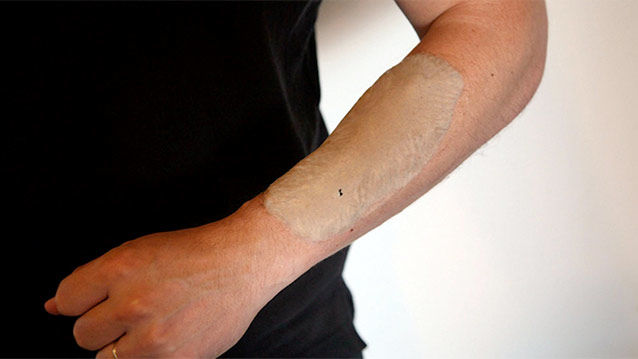
Last year, for instance, artist Anthony Antonellis had an RFID chip embedded in his arm that could store and transfer art to his handheld smartphone. 

Researchers are experimenting with embedded sensors that turn human bone into living speakers. 

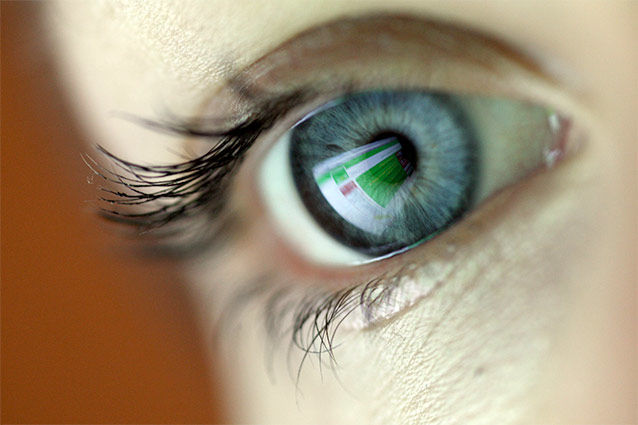
Other scientists are working on eye implants that let an image be captured with a blink and transmitted to any local storage (such as that arm-borne RFID chip). 

But what takes the place of the screen if the phone is inside you? Techs at Autodesk are experimenting with a system that can display images through artificial skin. 

Or the images may appear in your eye implants. 

2. Healing chips 

Right now, patients are using cyber-implants that tie directly to smartphone apps to monitor and treat diseases. 

A new bionic pancreas being tested at America's Boston University, for instance, has a tiny sensor on an implantable needle that talks directly to a smartphone app to monitor blood-sugar levels for diabetics. 

Scientists in London are developing swallowable capsule-sized circuits that monitor fat levels in obese patients and generate genetic material that makes them feel "full". 

It has potential as an alternative to current surgery or other invasive ways to handle gross obesity. 

Dozens of other medical issues from heart murmurs to anxiety have implant/phone initiatives under way. 


3. Cyber pills that talk to your doctor 

Implantables won't just communicate with your phone; they'll chat up your doctor, too. 

In a project named Proteus, after the eensy body-navigating vessel in the film Fantastic Voyage, a British research team is developing cyber-pills with microprocessors in them that can text doctors directly from inside your body. 

The pills can share (literally) inside info to help doctors know if you are taking your medication properly and if it is having the desired effect. 

4. Bill Gates' implantable birth control 
Image

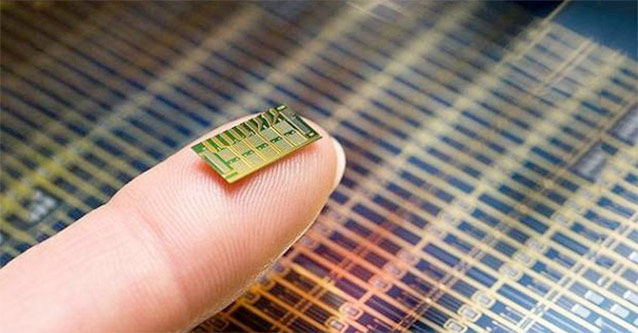
The Gates Foundation is supporting an MIT project to create an implantable female compu-contraceptive controlled by an external remote control

The tiny chip generates small amounts of contraceptive hormone from within the woman's body for up to 16 years. 

Implantation is no more invasive than a tattoo. 

And, "The ability to turn the device on and off provides a certain convenience factor for those who are planning their family.", said Dr Robert Farra of MIT. 

Gives losing the remote a whole new meaning. 

5. Smart tattoos 
Image

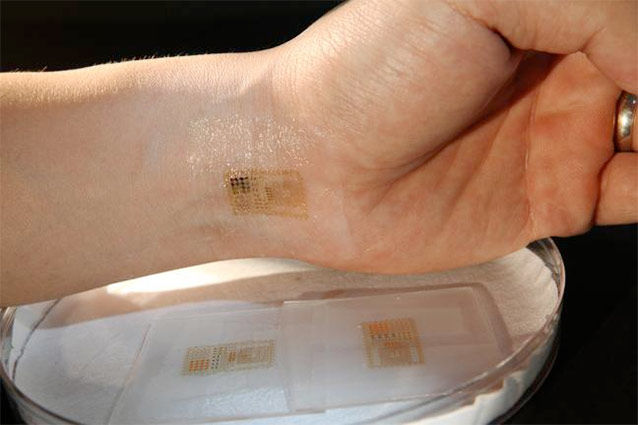
Tattoos are hip and seemingly ubiquitous, so why not smart, digital tattoos that not only look cool, but can also perform useful tasks, like unlocking your car or entering mobile phone codes with a finger-point? 

Researchers at the University of Illinois have crafted an implantable skin mesh of computer fibers thinner than a human hair that can monitor your body's inner workings from the surface. 

A company called Dangerous Things has an NFC chip that can be embedded in a finger through a tattoo-like process, letting you unlock things or enter codes simply by pointing. 

A Texas research group has developed microparticles that can be injected just under the skin, like tattoo ink, and can track body processes

All of these are much wiser choices than the name of a soon-to-be-ex. 


6. Brain-computer interface 


Image

Having the human brain linked directly to computers is the dream (or nightmare) of sci-fi. 

A team at Brown University called BrainGate is one of the companies at the forefront of the real-world movement to link human brains directly to computers for a host of uses. 

As the BrainGate website says, "using a baby aspirin-sized array of electrodes implanted into the brain, early research from the BrainGate team has shown that the neural signals can be 'decoded' by a computer in real-time and used to operate external devices." See this article for DARPA brain implants and this article on Nanotechnology and the brain. 

Intel scientist Dean Pomerleau said in a recent article, "Eventually people may be willing to be more committed to brain implants."  "Imagine being able to surf the Web with the power of your thoughts."  All of this is already possible now.  

7. Meltable bio-batteries 

One of the challenges for implantable tech has been how to get power to devices tethered inside or floating around in human bodies. 

You can't plug them in. 

You can't easily take them out to replace a battery. 

A team at Draper Laboratory in Cambridge, Massachusetts, is working on biodegradable batteries. 

They generate power inside the body, transfer it wirelessly where needed, and then simply melt away. 

Another project is looking at how to use the body's own glucose to generate power for implantables. 

Think the potato battery of grammar school science, but smaller and much more advanced. 


8. Smart dust 
Image
Perhaps the most startling of current implantable innovations is smart dust, arrays of full computers with antennas, each much smaller than a grain of sand, that can organize themselves inside the body into as-needed networks to power a whole range of complex internal processes. 

Imagine swarms of these nano-devices, called motes, attacking early cancer or bringing pain relief to a wound or even storing critical personal information in a manner that is deeply encrypted and hard to hack. 

With smart dust, doctors will be able to act inside your body without opening you up, and information could be stored inside you, deeply encrypted, until you unlocked it from your very personal nano network. 


9. The verified self 


Image
Implantables hammer against social norms. 

They raise privacy issues and even point to a larger potential dystopia. 

This technology could be used to ID every single human being, for example. 

Already, the US military has serious programs afoot to equip soldiers with implanted RFID chips, so keeping track of troops becomes automatic and worldwide. 

Many social critics believe the expansion of this kind of ID is inevitable. 

Some see it as a positive: improved crime fighting, universal secure elections, a positive revolution in medical information and response, and never a lost child again. 

Others see the perfect Orwellian society: a Big Brother who, knowing all and seeing all, can control all. 

And some see the first big, fatal step toward the Singularity, that moment when humanity turns its future over to software.

Sunday, December 3, 2023

Why the Cover-Up?

 Ask yourself why every single news source that talks about politics and religion is covering up this technology. You might not want to face it, but it is true. No mention from the police or intelligence agencies. Why is  there virtually no mention from the billionaire or multi-millionaire class?  Especially Silicon Valley.  


DARPA Control Grid

At the 4:33 mark of the video below, they begin to talk about human machine interface.  See where they talk about injecting nanotechnology into people at 5:33.  See here about hacking people from Yuval Harari.  See here also. See here for a doctor talking about satellite terrorism.  See here Targeted Individual Program is US Special Operations Command’s “Continuous Clandestine Tagging, Tracking, and Locating Hostile Forces. See here for 9 creepy technologies that could be in you right now. See here for a diagram of an intra-body nanonetwork. See here for strangers able to log into your daughters.  See here for Documented Radio Frequency Testing, Torture and Experimentation from the 70's. See this CNN special from the 80's talking about some of this technology. Amazing, you would never see this on CNN today. 

Evidence of What I Am Talking About- Slander and
Electronic Warfare Are In Military Field Manuals

Click here to see the U.S. military manual for Guerrilla Warfare and Special Forces Operations.

In Chapter 9, at section 152 under the Psychological Operations in Support of Unconventional Warfare they refer to using slander as a tactic against an enemy population. This is why I refer to these tactics

Now, click here to see the Army Special Operations Forces Unconventional Warfare Manual. Go to Appendix B-23, and you will see they admit using Electronic Warfare.

There you go, they admit using slander and electronic warfare, just like I said.

It is so important for people to realize that this is not just the military doing this, this is the Intelligence Agencies and the Police.

CSIS, CSE and the RCMP in Canada and the NSA, CIA and the FBI in the United States. This is COINTELPRO

See here for more about electronic warfare from Wikipedia. (Target humans.) 


Diagram of a Stasi Takedown: Organized Stalking and Torture (Originally Posted in 2017)


Click On Picture Above to Enlarge

CSIS Videos Talking About Organized Stalking and Following People Around. This Works Through the Whole Government of Canada and Filters Down into Community Watch.