Tuesday, December 12, 2023

Monday, December 4, 2023
Nine Creepy Orwellian Technologies That Are Potentially Inside You Right Now
Wearables will have their moment in the sun, but they're simply a transition technology.
Technology has moved from existing outside our bodies to residing inside us. Here are nine signs that implantable tech is here now, growing rapidly, and that it will be part of your life (and your body) in the near future.
1. Implantable smartphones
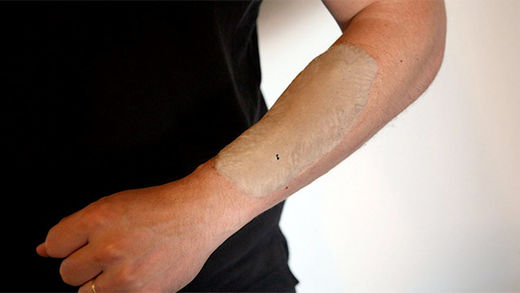
Sure, we're virtual connected to our phones 24/7 now, but what if we were actually connected to our phones?
That's already starting to happen.
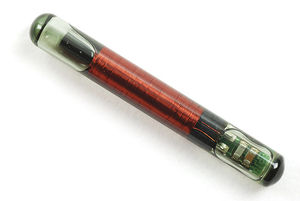
Last year, for instance, artist Anthony Antonellis had an RFID chip embedded in his arm that could store and transfer art to his handheld smartphone.
Researchers are experimenting with embedded sensors that turn human bone into living speakers.
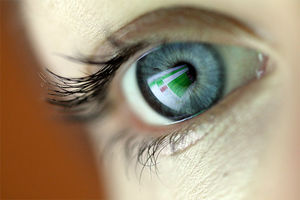
Other scientists are working on eye implants that let an image be captured with a blink and transmitted to any local storage (such as that arm-borne RFID chip).
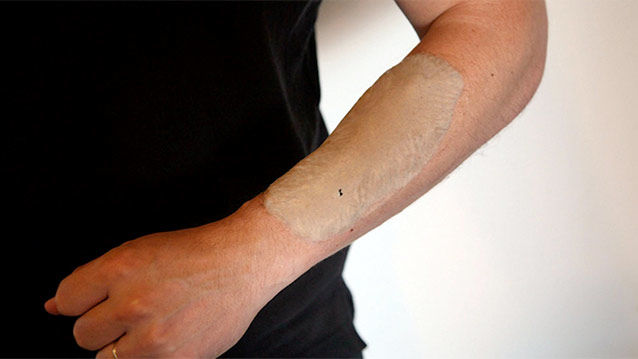
But what takes the place of the screen if the phone is inside you? Techs at Autodesk are experimenting with a system that can display images through artificial skin.
Or the images may appear in your eye implants.
2. Healing chips
Right now, patients are using cyber-implants that tie directly to smartphone apps to monitor and treat diseases.
A new bionic pancreas being tested at America's Boston University, for instance, has a tiny sensor on an implantable needle that talks directly to a smartphone app to monitor blood-sugar levels for diabetics.
Scientists in London are developing swallowable capsule-sized circuits that monitor fat levels in obese patients and generate genetic material that makes them feel "full".
It has potential as an alternative to current surgery or other invasive ways to handle gross obesity.
Dozens of other medical issues from heart murmurs to anxiety have implant/phone initiatives under way.
3. Cyber pills that talk to your doctor
Implantables won't just communicate with your phone; they'll chat up your doctor, too.
In a project named Proteus, after the eensy body-navigating vessel in the film Fantastic Voyage, a British research team is developing cyber-pills with microprocessors in them that can text doctors directly from inside your body.
The pills can share (literally) inside info to help doctors know if you are taking your medication properly and if it is having the desired effect.
4. Bill Gates' implantable birth control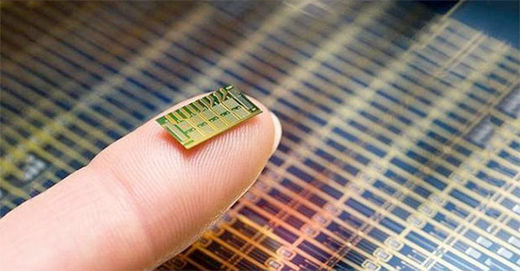
The Gates Foundation is supporting an MIT project to create an implantable female compu-contraceptive controlled by an external remote control.
The tiny chip generates small amounts of contraceptive hormone from within the woman's body for up to 16 years.
Implantation is no more invasive than a tattoo.
And, "The ability to turn the device on and off provides a certain convenience factor for those who are planning their family.", said Dr Robert Farra of MIT.
Gives losing the remote a whole new meaning.
5. Smart tattoos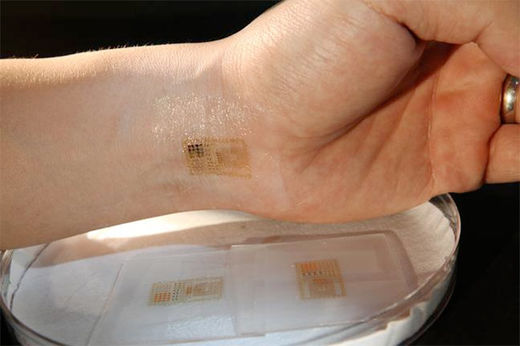
Tattoos are hip and seemingly ubiquitous, so why not smart, digital tattoos that not only look cool, but can also perform useful tasks, like unlocking your car or entering mobile phone codes with a finger-point?
Researchers at the University of Illinois have crafted an implantable skin mesh of computer fibers thinner than a human hair that can monitor your body's inner workings from the surface.
A company called Dangerous Things has an NFC chip that can be embedded in a finger through a tattoo-like process, letting you unlock things or enter codes simply by pointing.
A Texas research group has developed microparticles that can be injected just under the skin, like tattoo ink, and can track body processes.
All of these are much wiser choices than the name of a soon-to-be-ex.
6. Brain-computer interface
Having the human brain linked directly to computers is the dream (or nightmare) of sci-fi.
A team at Brown University called BrainGate is one of the companies at the forefront of the real-world movement to link human brains directly to computers for a host of uses.
As the BrainGate website says, "using a baby aspirin-sized array of electrodes implanted into the brain, early research from the BrainGate team has shown that the neural signals can be 'decoded' by a computer in real-time and used to operate external devices." See this article for DARPA brain implants and this article on Nanotechnology and the brain.
Intel scientist Dean Pomerleau said in a recent article, "Eventually people may be willing to be more committed to brain implants." "Imagine being able to surf the Web with the power of your thoughts." All of this is already possible now.
7. Meltable bio-batteries
One of the challenges for implantable tech has been how to get power to devices tethered inside or floating around in human bodies.
You can't plug them in.
You can't easily take them out to replace a battery.
A team at Draper Laboratory in Cambridge, Massachusetts, is working on biodegradable batteries.
They generate power inside the body, transfer it wirelessly where needed, and then simply melt away.
Another project is looking at how to use the body's own glucose to generate power for implantables.
Think the potato battery of grammar school science, but smaller and much more advanced.
8. Smart dust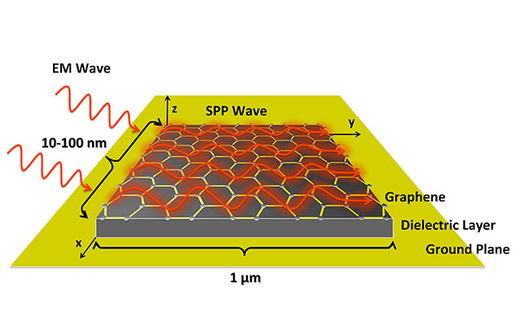 Perhaps the most startling of current implantable innovations is smart dust, arrays of full computers with antennas, each much smaller than a grain of sand, that can organize themselves inside the body into as-needed networks to power a whole range of complex internal processes.
Imagine swarms of these nano-devices, called motes, attacking early cancer or bringing pain relief to a wound or even storing critical personal information in a manner that is deeply encrypted and hard to hack.
With smart dust, doctors will be able to act inside your body without opening you up, and information could be stored inside you, deeply encrypted, until you unlocked it from your very personal nano network.
9. The verified self
 Implantables hammer against social norms.
They raise privacy issues and even point to a larger potential dystopia.
This technology could be used to ID every single human being, for example.
Already, the US military has serious programs afoot to equip soldiers with implanted RFID chips, so keeping track of troops becomes automatic and worldwide.
Many social critics believe the expansion of this kind of ID is inevitable.
Some see it as a positive: improved crime fighting, universal secure elections, a positive revolution in medical information and response, and never a lost child again.
Others see the perfect Orwellian society: a Big Brother who, knowing all and seeing all, can control all.
And some see the first big, fatal step toward the Singularity, that moment when humanity turns its future over to software.
Technology has moved from existing outside our bodies to residing inside us. Here are nine signs that implantable tech is here now, growing rapidly, and that it will be part of your life (and your body) in the near future.
1. Implantable smartphones
Sure, we're virtual connected to our phones 24/7 now, but what if we were actually connected to our phones?
That's already starting to happen.
Last year, for instance, artist Anthony Antonellis had an RFID chip embedded in his arm that could store and transfer art to his handheld smartphone.
Researchers are experimenting with embedded sensors that turn human bone into living speakers.
Other scientists are working on eye implants that let an image be captured with a blink and transmitted to any local storage (such as that arm-borne RFID chip).
But what takes the place of the screen if the phone is inside you? Techs at Autodesk are experimenting with a system that can display images through artificial skin.
Or the images may appear in your eye implants.
2. Healing chips
Right now, patients are using cyber-implants that tie directly to smartphone apps to monitor and treat diseases.
A new bionic pancreas being tested at America's Boston University, for instance, has a tiny sensor on an implantable needle that talks directly to a smartphone app to monitor blood-sugar levels for diabetics.
Scientists in London are developing swallowable capsule-sized circuits that monitor fat levels in obese patients and generate genetic material that makes them feel "full".
It has potential as an alternative to current surgery or other invasive ways to handle gross obesity.
Dozens of other medical issues from heart murmurs to anxiety have implant/phone initiatives under way.
3. Cyber pills that talk to your doctor
Implantables won't just communicate with your phone; they'll chat up your doctor, too.
In a project named Proteus, after the eensy body-navigating vessel in the film Fantastic Voyage, a British research team is developing cyber-pills with microprocessors in them that can text doctors directly from inside your body.
The pills can share (literally) inside info to help doctors know if you are taking your medication properly and if it is having the desired effect.
4. Bill Gates' implantable birth control
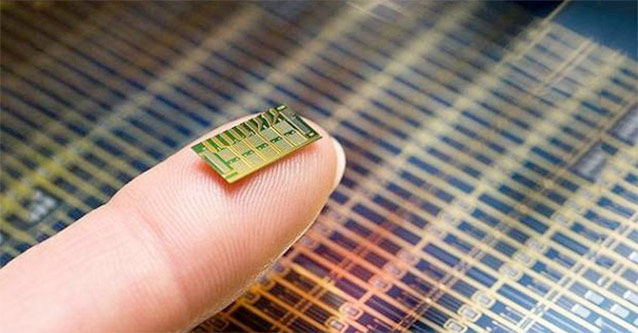
The Gates Foundation is supporting an MIT project to create an implantable female compu-contraceptive controlled by an external remote control.
The tiny chip generates small amounts of contraceptive hormone from within the woman's body for up to 16 years.
Implantation is no more invasive than a tattoo.
And, "The ability to turn the device on and off provides a certain convenience factor for those who are planning their family.", said Dr Robert Farra of MIT.
Gives losing the remote a whole new meaning.
5. Smart tattoos
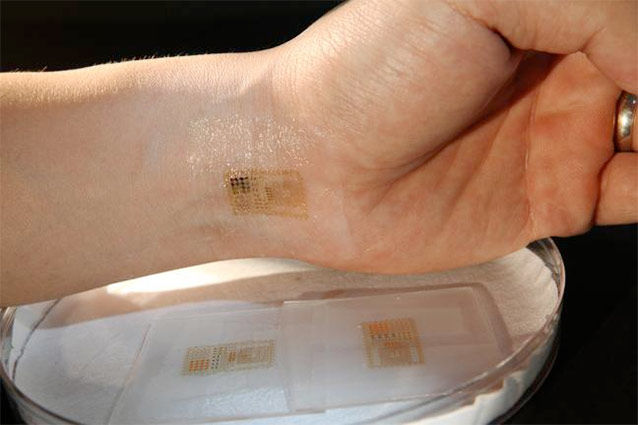
Tattoos are hip and seemingly ubiquitous, so why not smart, digital tattoos that not only look cool, but can also perform useful tasks, like unlocking your car or entering mobile phone codes with a finger-point?
Researchers at the University of Illinois have crafted an implantable skin mesh of computer fibers thinner than a human hair that can monitor your body's inner workings from the surface.
A company called Dangerous Things has an NFC chip that can be embedded in a finger through a tattoo-like process, letting you unlock things or enter codes simply by pointing.
A Texas research group has developed microparticles that can be injected just under the skin, like tattoo ink, and can track body processes.
All of these are much wiser choices than the name of a soon-to-be-ex.
6. Brain-computer interface
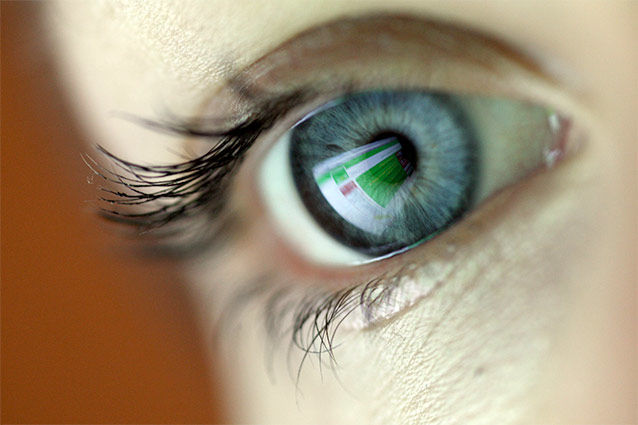
Having the human brain linked directly to computers is the dream (or nightmare) of sci-fi.
A team at Brown University called BrainGate is one of the companies at the forefront of the real-world movement to link human brains directly to computers for a host of uses.
As the BrainGate website says, "using a baby aspirin-sized array of electrodes implanted into the brain, early research from the BrainGate team has shown that the neural signals can be 'decoded' by a computer in real-time and used to operate external devices." See this article for DARPA brain implants and this article on Nanotechnology and the brain.
Intel scientist Dean Pomerleau said in a recent article, "Eventually people may be willing to be more committed to brain implants." "Imagine being able to surf the Web with the power of your thoughts." All of this is already possible now.
7. Meltable bio-batteries
One of the challenges for implantable tech has been how to get power to devices tethered inside or floating around in human bodies.
You can't plug them in.
You can't easily take them out to replace a battery.
A team at Draper Laboratory in Cambridge, Massachusetts, is working on biodegradable batteries.
They generate power inside the body, transfer it wirelessly where needed, and then simply melt away.
Another project is looking at how to use the body's own glucose to generate power for implantables.
Think the potato battery of grammar school science, but smaller and much more advanced.
8. Smart dust
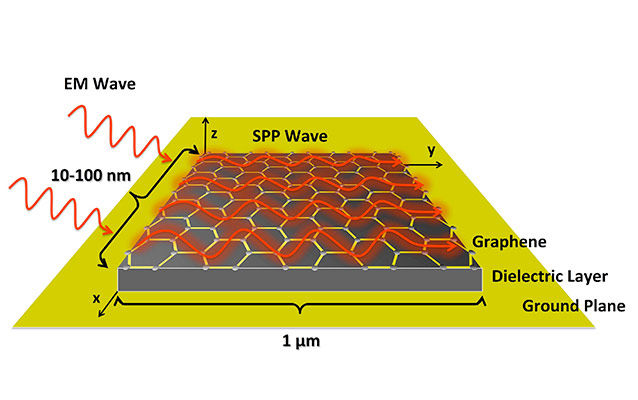
Imagine swarms of these nano-devices, called motes, attacking early cancer or bringing pain relief to a wound or even storing critical personal information in a manner that is deeply encrypted and hard to hack.
With smart dust, doctors will be able to act inside your body without opening you up, and information could be stored inside you, deeply encrypted, until you unlocked it from your very personal nano network.
9. The verified self
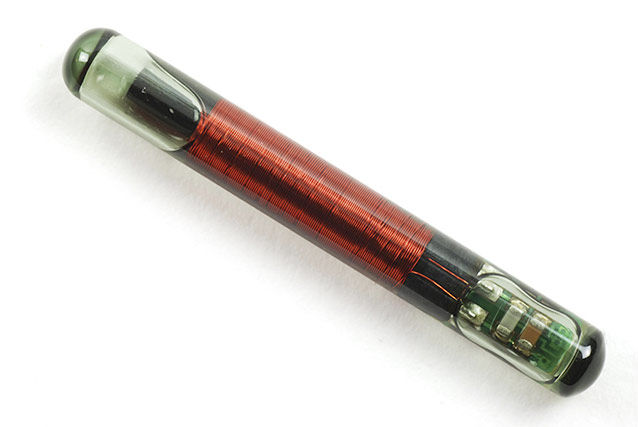
They raise privacy issues and even point to a larger potential dystopia.
This technology could be used to ID every single human being, for example.
Already, the US military has serious programs afoot to equip soldiers with implanted RFID chips, so keeping track of troops becomes automatic and worldwide.
Many social critics believe the expansion of this kind of ID is inevitable.
Some see it as a positive: improved crime fighting, universal secure elections, a positive revolution in medical information and response, and never a lost child again.
Others see the perfect Orwellian society: a Big Brother who, knowing all and seeing all, can control all.
And some see the first big, fatal step toward the Singularity, that moment when humanity turns its future over to software.
Sunday, December 3, 2023
Why the Cover-Up?
Ask yourself why every single news source that talks about politics and religion is covering up this technology. You might not want to face it, but it is true. No mention from the police or intelligence agencies. Why is there virtually no mention from the billionaire or multi-millionaire class? Especially Silicon Valley.
DARPA Control Grid
At the 4:33 mark of the video below, they begin to talk about human machine interface. See where they talk about injecting nanotechnology into people at 5:33. See here about hacking people from Yuval Harari. See here also. See here for a doctor talking about satellite terrorism. See here Targeted Individual Program is US Special Operations Command’s “Continuous Clandestine Tagging, Tracking, and Locating Hostile Forces. See here for 9 creepy technologies that could be in you right now. See here for a diagram of an intra-body nanonetwork. See here for strangers able to log into your daughters. See here for Documented Radio Frequency Testing, Torture and Experimentation from the 70's. See this CNN special from the 80's talking about some of this technology. Amazing, you would never see this on CNN today.
Evidence of What I Am Talking About- Slander and
Electronic Warfare Are In Military Field Manuals
Click here to see the U.S. military manual for Guerrilla Warfare and Special Forces Operations.
In Chapter 9, at section 152 under the Psychological Operations in Support of Unconventional Warfare they refer to using slander as a tactic against an enemy population. This is why I refer to these tactics.
Now, click here to see the Army Special Operations Forces Unconventional Warfare Manual. Go to Appendix B-23, and you will see they admit using Electronic Warfare.
There you go, they admit using slander and electronic warfare, just like I said.
It is so important for people to realize that this is not just the military doing this, this is the Intelligence Agencies and the Police.
CSIS, CSE and the RCMP in Canada and the NSA, CIA and the FBI in the United States. This is COINTELPRO.
See here for more about electronic warfare from Wikipedia. (Target humans.)
Diagram of a Stasi Takedown: Organized Stalking and Torture (Originally Posted in 2017)

Click On Picture Above to Enlarge
CSIS Videos Talking About Organized Stalking and Following People Around. This Works Through the Whole Government of Canada and Filters Down into Community Watch.
Wednesday, October 18, 2023
Sunday, October 1, 2023
Tuesday, August 1, 2023
Wednesday, June 21, 2023
Brain Implants ‘Could Lead to Hackers Controlling Your Mind,’ Scientists Warn (Also the Bio-Digital Revolution With mRNA Vaccines Though They Not Talk About in This Article) Tesla Chief Elon Musk Teams up With Covid-19 Player CureVac to Build 'RNA Micro-Factories'
Read this here.
Abstract
The biodigital convergence describes the intersection, and in some cases merging, of biological and digital technologies. Biodigital technologies include mRNA vaccines used to treat COVID-19, digitally controlled surveillance insects, microorganisms genetically engineered to produce medicinal compounds, and more. While significant scholarship has been paid to the ethical dimensions of biodigital technologies from a Western standpoint, little attention has focused on Indigenous views on the biodigital convergence. In this article, we explore the biodigital convergence from a Haudenosaunee perspective and suggest that insights from Indigenous philosophical traditions—specifically regarding relationality and territory—may be necessary for humanity to adapt to the profound and existential changes implicit in the biodigital convergence.
See here for more about the bio-digital convergence.
See here for more about Elon Musk and CureVac.
Elon Musk isn’t content with conquering space with Space X, revolutionizing transport with Hyperloop and making tons of money with his Tesla electric car.
One of his companies aims to create a Matrix-style ‘brain implant’ to plug humans directly into machines. It’s a leap forward that could lead to humans merging with machines – but a group of neuroscientists has warned that brain scans, brain implants, and related technologies could have terrifying side effects.
In a letter in the scientific journal Nature this week, 27 top neuroscientists highlighted some of the risks of the technology. The scientists pointed out that some people who have had brain implants report feeling an ‘altered sense of identity. The researchers write, ‘The technology could also exacerbate social inequalities and offer corporations, hackers, governments or anyone else new ways to exploit and manipulate people,.
‘It could profoundly alter some core human characteristics: private mental life, individual agency and an understanding of individuals as entities bound by their bodies.’ Algorithms that are used to target advertising, calculate insurance premiums or match potential partners will be considerably more powerful if they draw on neural information — for instance, activity patterns from neurons associated with certain states of attention.
‘And neural devices connected to the Internet open up the possibility of individuals or organizations (hackers, corporations or government agencies) tracking or even manipulating an individual’s mental experience.
Subscribe to:
Comments (Atom)